Step by step guide to growing Cacti and Succulents from seeds.
The best time of year to sow your seeds is in late winter (using a bottom heated tray) or early spring, as the seedlings have a chance to grow and get established before the winter comes around again. We have had great success with sowing into the summer too, there seems to be a more even germination.Most importantly is starting with fresh seed
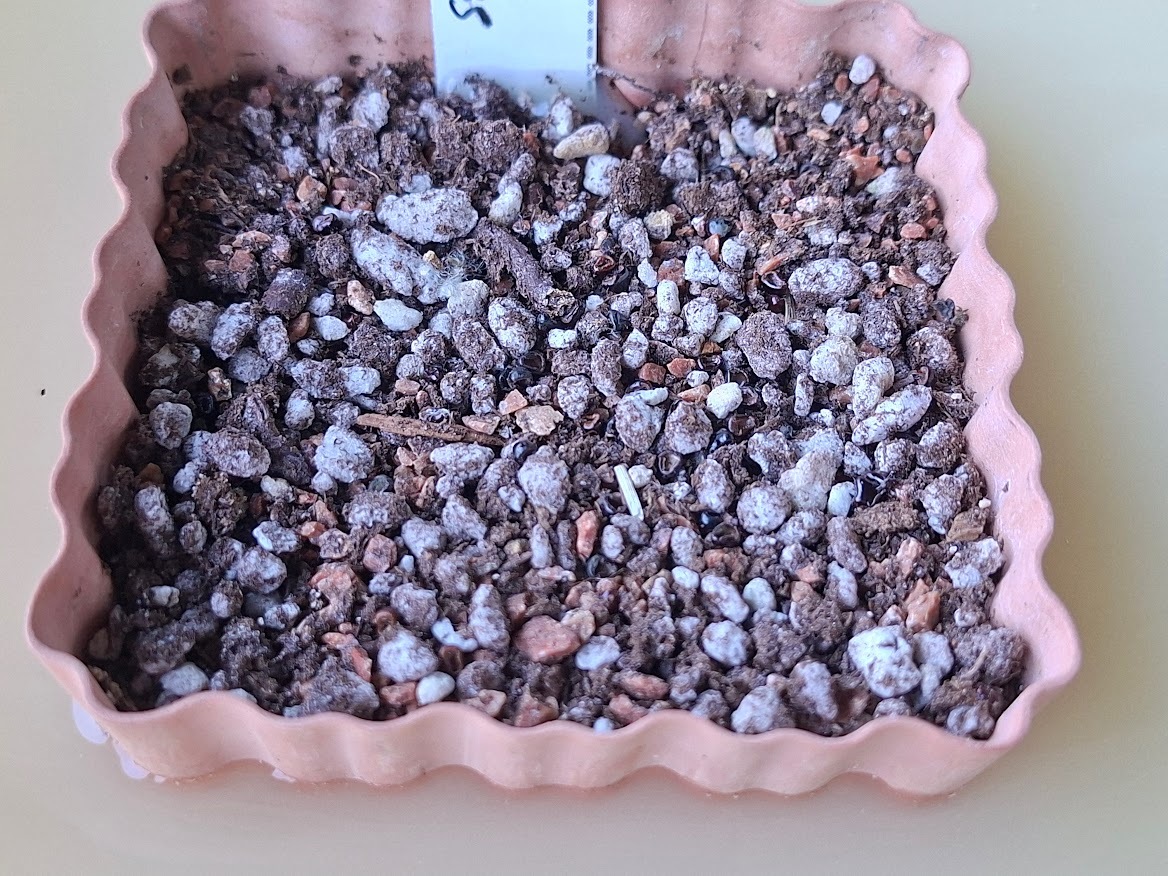
The above image is fresh seeds from an Astrophytum capricorne plant. If you look close up, you will see they are not round. Don't worry, thats just the way astrophytum seeds look.
We hear from many people who say they can't grow from seed, and think its something they have done wrong.
In reality they were using very old seed, or seed that had been stored incorrectly.
The Mix
From many years experience, we have found the best mix to use is equal parts of Peat Moss (or coir peat) , Coarse river sand, and Vermiculite.
Just use a container and grab a scoop of each, and mix well.
Place into a shallow pot, making sure you don't firm down mix too much.
Now add your seeds.
Sprinke the seeds into your pot as evenly as possible.
Only one variety per pot is recommended, otherwise the faster growing variety will crowd out the others.
Now firm down gently.
Some varieties need to be covered to germinate. In that case sprinkle very lightly just covering the seeds with the same mix, and firm down gently.
Fungicide makes all the difference
Using fungicide helps eliminate damping off in new seedlings. In a shallow dish, make up a solution of fungicide as per directions on the container. There are many brands out there, this is the one we are using at the moment.
Soak in the fungicide solution
Now that you have your fungicide made up, place your pot with the seeds into the solution. Let the fungicide solution soak all the way through until you can see the potting medium is wet.
Remove and allow to drain
Remove the pot and allow the excess moisture to drain away. Don't forget to add a name tag.
How often are you going to tend to your seedlings?
At this stage, you have a number of different choices as to how you want to germinate your seeds. It all depends on how often you want to be checking them.
Keep in mind that the soil must stay damp.
Whichever way you decide to go, please remember to keep them out of direct sunlight.
A shade house is perfect, although not everyone has that luxury, so just a piece of shadecloth over a small framework will work.
The main thing to remember is don't let the soil dry out completely, they need to be kept moist but not wet.
The plastic bag method
Some people swear by this method, but it is not our favourite. The advantage to this method is that you can leave them for long periods of time before they become dry. The disadvantage is the lack of air flow. The seeds do like a humid environment to germinate, but after the germination they benefit from more air around them.
Mini Hot House
If you have one of these laying around, its perfect for the job. The little tabs can be closed off during germination, then opened up to allow a little more fresh air. We highly recommend this for the hobbyist.
Above are a couple of options, it all depends on how much money you want to spend on your set up. Bottom heated trays work brilliantly, and give you the advantage of getting them started in late winter.
For the budget friendly people, a cheaper option would be using old supermarket packaging containers. There are a heap of fruits and veggies and bakery items that are coming packaged in hard clear plastic dishes these days. They work really well as mini hot houses.
We get asked a lot about when to move the plants to a sunnier position, and when to re-pot.
As young seedlings, they do not have the same light requirements as older cacti. If plants are put into a hot position too quickly, you have a greater chance of loosing them.
If your seedlings are a bright green and rather skinny and look like they are stretching for more light, you may need to move them to a brighter position.
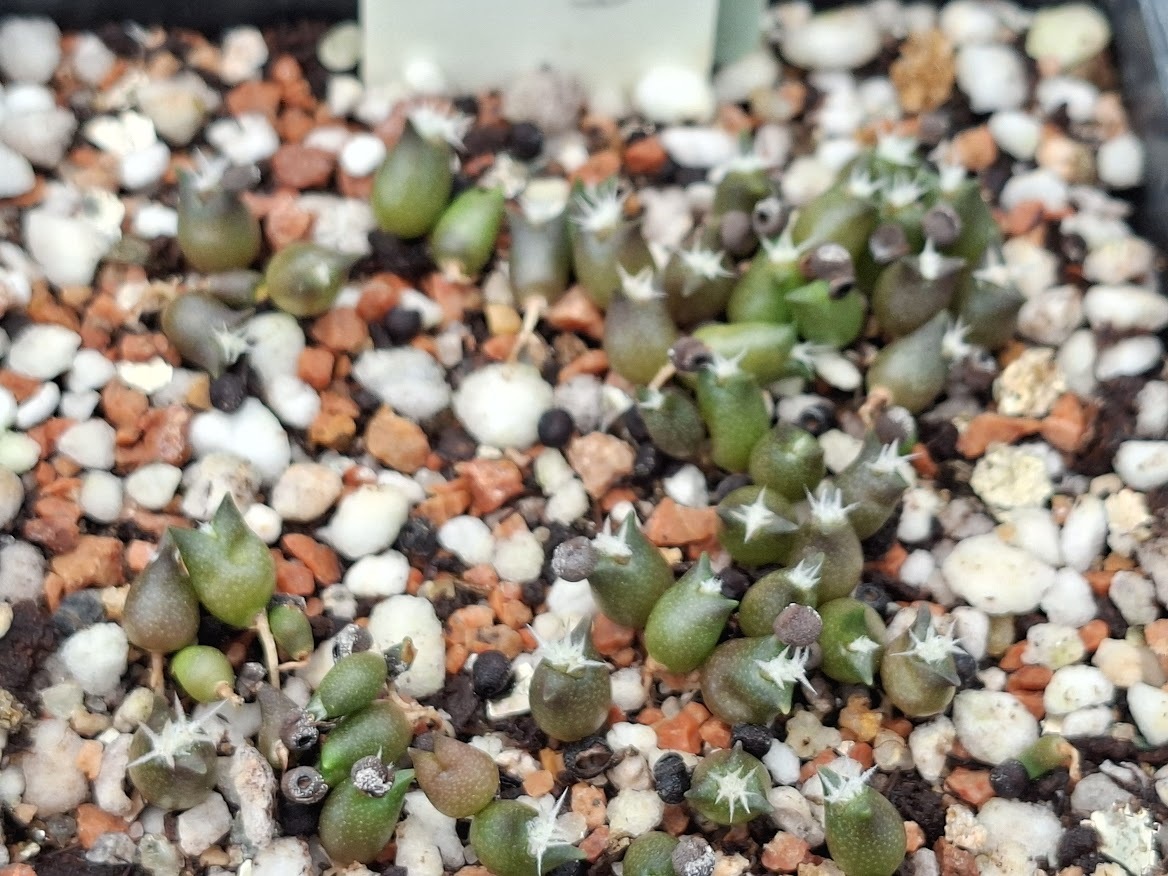
If your seedlings are fat and chunky like the ones above, they are receiving the correct amount of light and can stay in that position until they are ready to be potted on.
Depending on what time of year you started your seeds, and how quickly that particular variety grows, you may be able to pot on taller growing varieties like pachycereus in a matter of a couple of months. For the slower growing species, it may be best to leave them in their original container and position, until the following spring ( growing season ) to pot them on.
When you are ready to pot up - If your plants are still in a humid environment (plastic bag method), gradually get them acclimatised to the regualr air temperature first. It's best to do this over a couple of weeks by opening the bag gradually and letting more air in.Once you have done that, carefully separate the seedlings and plant into individual pots. Still keep in a similar position (under shadecloth) until they get over the shock of the transplant. Slowly introduce more light.Morning sun under a lighter grade of shadecloth, especially in thespringis a great way to start, as it's not as harsh and is less likely to burn the new babies.
Well I hope this has inspired you to give it a go.It's easy if you follow the steps above.